
Pumpable or non-pumpable feed? Which one gives the best commercial BSF farm?
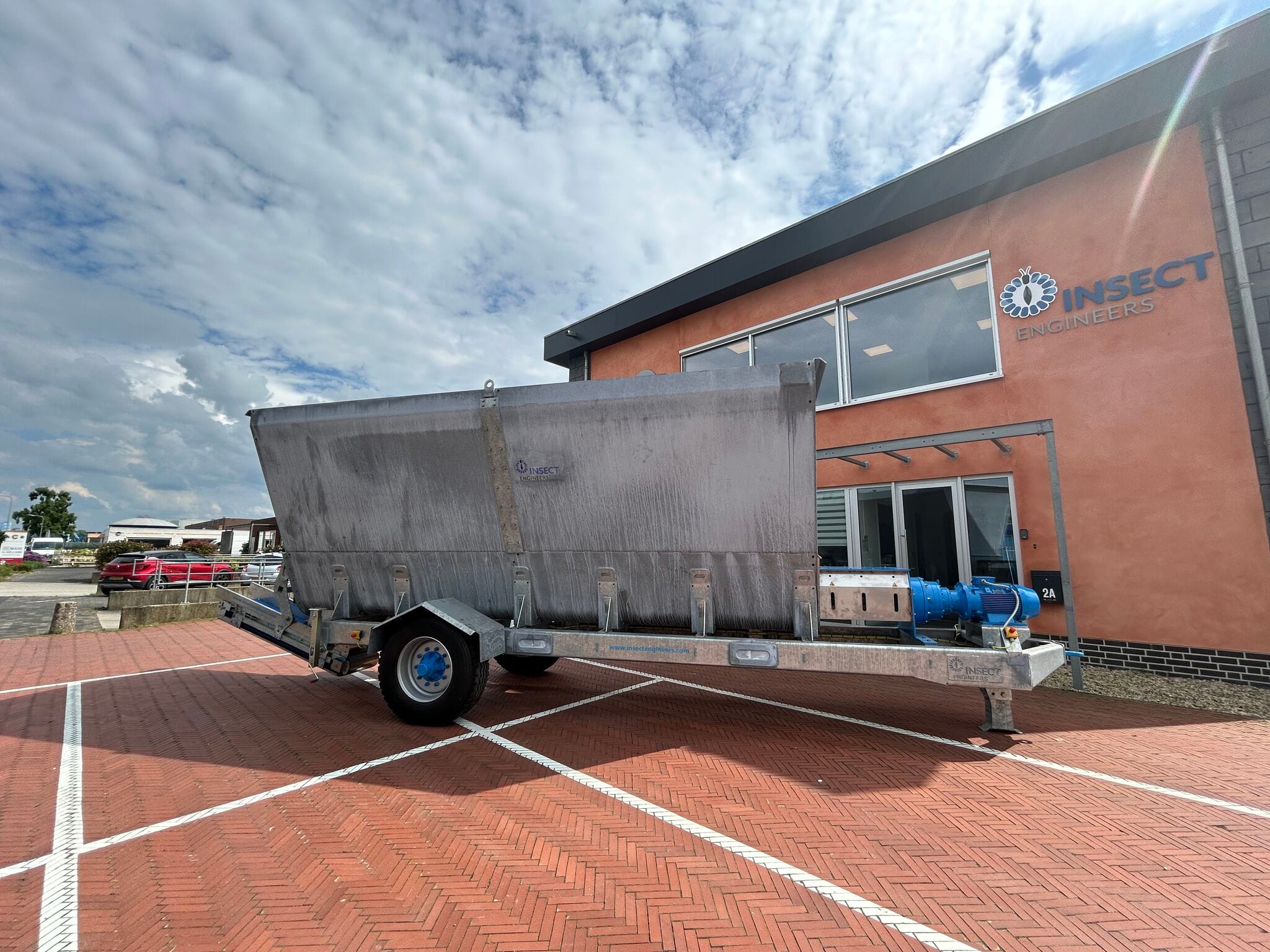
In the Netherlands we have a saying: “Pompen of verzuipen” (pump or drown). But does that also apply to feeding Black Soldier Fly larvae.
Many entrepreneurs assume that pumpable feed is always the better choice. That sounds logical. Pipes look clean, automated and efficient.
The real question is not whether your feed can be pumped. The real question is whether your factory can still operate when your feed changes.
Pumpability is not the same as flexibility
Another misconception is that pumpable automatically means a high moist substrate. It doesn’t. Feed can have a high moisture content and still not be suitable for pumping through long pipe systems.
What I often see is that the available raw materials change over the lifetime of a commercial factory. New suppliers appear, prices fluctuate and yesterday’s ideal substrate is no longer available. If your entire factory depends on pumpable feed, your flexibility disappears overnight.
Plan for changing feedstocks
Across several projects we’ve seen that transporting substrate with a mobile transport wagon gives operators far more freedom. Today you may process a pumpable substrate, but tomorrow you might switch to a dryer product with fibres or a thicker mixture that simply won’t travel through pipes reliably.
A future-proof BSF factory is not the one with the most impressive pipework. It’s the one that can keep producing when the market changes.
Happily shared by Bob Holtermans, founder of Insect Engineers. For more practical insights about commercial BSF farming and turnkey BSF engineering, visit www.insectengineers.com. Bye, bye, gotta fly!