
Is sieving in a BSF farm really just one process?
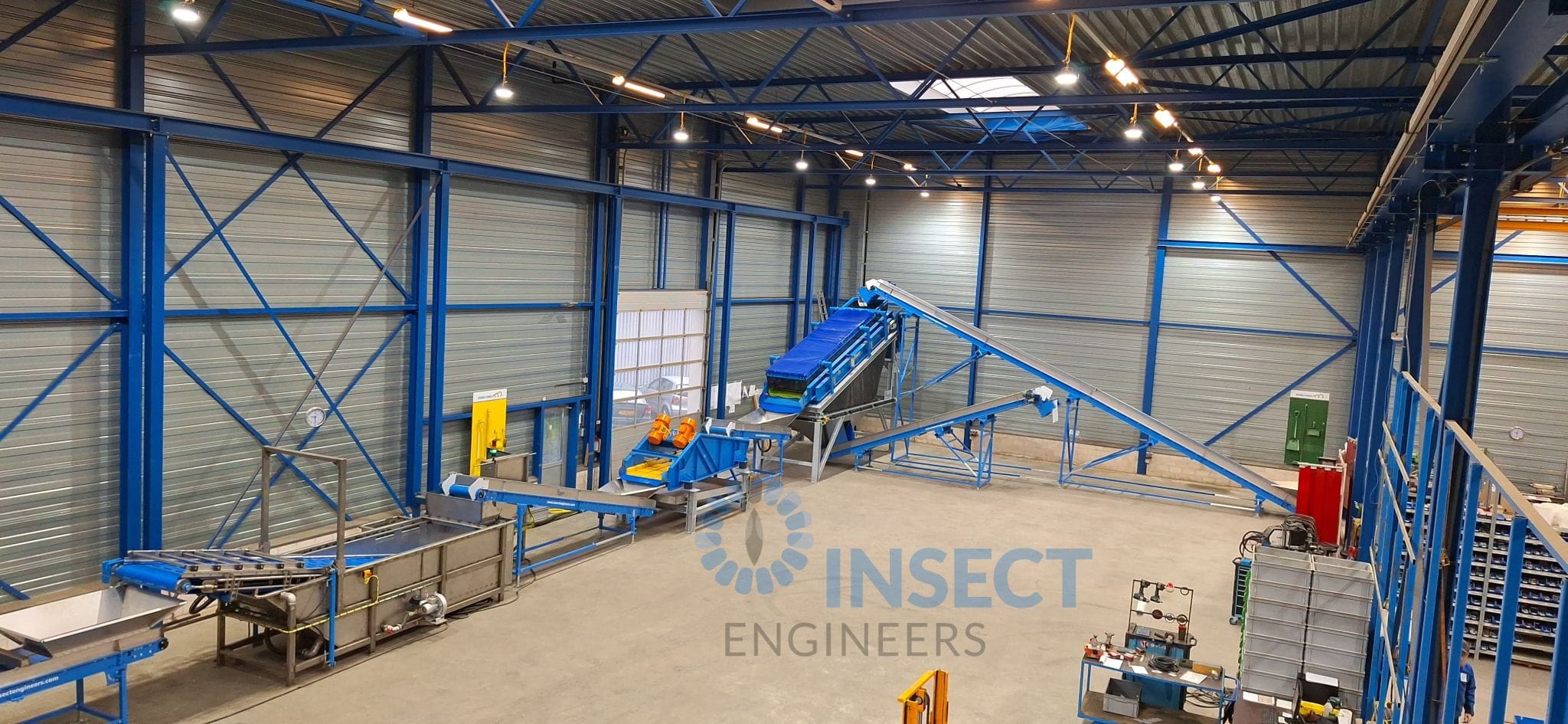
That is what many people assume. Buy a sieve, separate the larvae from the frass, and you’re done.
In practice, that is rarely how commercial BSF farms operate.
Here’s the unexpected part.
The biggest savings often have nothing to do with the sieve. They come from the choices you make before sieving.
There is no universal sieving strategy
Across several commercial projects we’ve seen that there isn’t one universal sieving strategy. Every farm is different. Product requirements, moisture content, energy prices, labour costs and desired end products all influence the best approach.
For smaller facilities, a straightforward separation process may be the right answer.
For larger commercial operations, however, it can be economically attractive to sieve at a much higher moisture content, wash the larvae, and only then remove the excess water using a water press solution. That approach can significantly lower operational (drying) costs while creating additional processing possibilities.
That sounds logical once you hear it, but it is often overlooked because sieving is treated as a single machine instead of a process with multiple steps.
Ask about the sequence, not only the machine
My advice is simple.
Don’t ask, “Which sieve do I need?”
Instead ask, “What sequence of separation steps gives me the best commercial result?”
The answer is rarely the same for two different farms.
Happily shared by Bob Holtermans, founder of Insect Engineers. For more practical insights about commercial BSF farming and turnkey BSF engineering, visit www.insectengineers.com. Bye, bye, gotta fly!